Taste at the table: spoons, bowls and boards in wood
Let us be clear from the first line: 5 Senses Romania sells no food, no honey, no preserves and nothing to drink. Taste, in this shop, is the wooden spoon in the pot and the board the bread is cut on. This page is about those objects: the woods, how they are shaped, and how to keep them for years.
Why beech, cherry and sycamore
Wood for the kitchen has to be close-grained, so it does not soak up liquid; hard enough to keep an edge on a spoon bowl; and free of any strong taste or smell of its own. Three woods do most of the work in our collection.
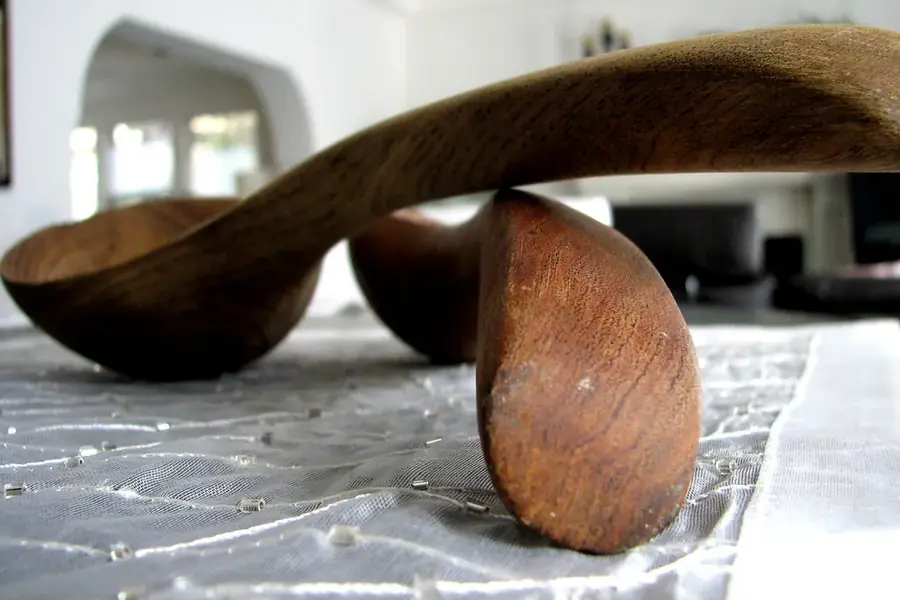
| Wood | Colour and grain | What we stock in it |
|---|---|---|
| Beech | Pale pinkish brown with tiny dark flecks; very even and fine | Stirring spoons, spatulas and ladles, the everyday tools of the stove |
| Cherry | Warm reddish brown that darkens to a deep amber with light and use | Serving spoons, small bowls and boards meant to be seen on the table |
| Sycamore | Almost white, with a faint shimmer; stays light | Bread and cheese boards, salad bowls and scoops |
Carved versus turned
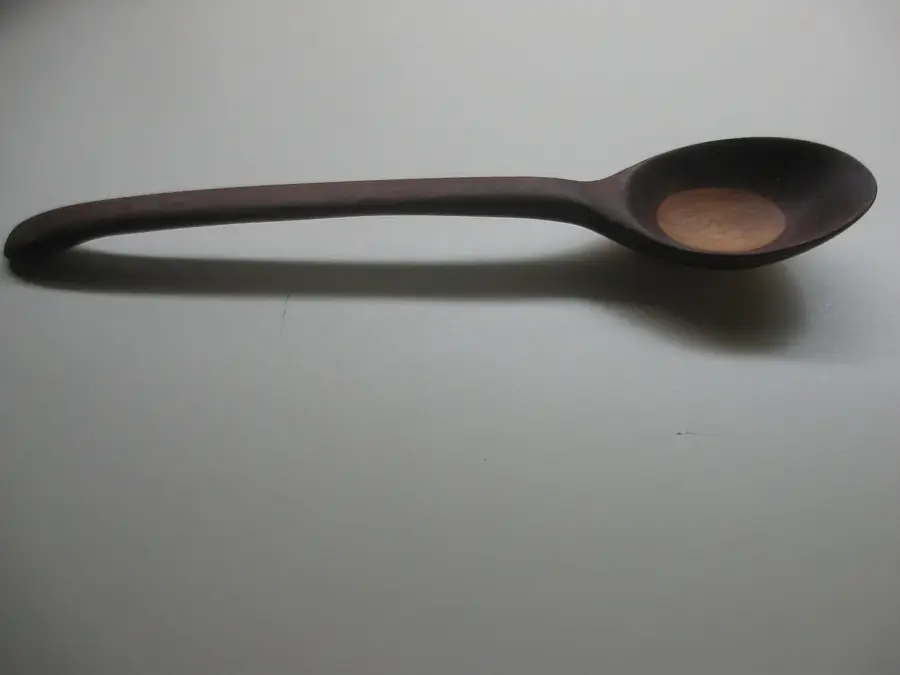
A carved spoon starts as a split of green, unseasoned wood. The carver roughs out the shape with a small axe, refines it with a straight knife, and hollows the bowl with a hook knife, following the grain so that it runs unbroken from the handle into the bowl. Green wood cuts cleanly and the knife leaves small, faceted surfaces you can feel with a finger. The spoon is then dried slowly so it does not crack. No two are the same: the curve of the handle follows the branch it came from.
A turned bowl is made on a lathe. A blank of wood spins while the turner shapes the outside and then the hollow with gouges, leaving a smooth, round form with fine rings where the tool travelled. Turning suits bowls, plates and round boards; carving suits spoons, ladles and anything with a handle. Many of our pieces combine both, with a turned bowl and a carved handle.
On boards you will see two kinds of surface. Most are cut along the length of the tree, so the grain runs across the face as long lines. A few heavy chopping blocks are made with the end grain upward, showing the growth rings; the knife slips between the fibres rather than cutting them, so the surface marks less and closes up again.
Oiled with food-grade oil, never varnished
Every piece leaves the workshop finished with food-grade oil rather than a varnish or lacquer. Oil sinks into the fibres and stays there, so there is no film to chip off into the food, and you can renew the finish at home with the same kind of oil whenever the wood looks thirsty. A plain food-grade mineral oil or a mix of oil and beeswax both work.
Avoid the oils in your kitchen cupboard for this job. Many cooking oils go sticky and smell stale on wood after a few weeks, which is the most common way a good spoon is spoiled.
Why wood never goes in the dishwasher
A dishwasher does three things wood hates at once: it soaks it, heats it and then dries it fast. Water swells the fibres, the heat drives out the natural oils, and the rapid drying makes the surface shrink faster than the core, which raises the grain into a furry texture and can open cracks along it. A board that goes through once or twice may warp so it rocks on the worktop. Wooden tableware also does not like to soak in the sink for the same reason.
The right way is quick and simple: wash by hand in warm water with a little washing-up liquid, rinse, wipe and leave to dry standing on its end or on a rack, with air on all sides. Boards dry best on edge.
Bringing back a dry or rough spoon
Every wooden spoon eventually looks pale and feels rough: the first washes raise a few fibres, and use wears the oil away. It is not damage, and it takes ten minutes to put right.
- Wash the spoon and let it dry completely, overnight if you can.
- If the surface is fuzzy, rub it lightly along the grain with fine abrasive paper until it feels smooth again. Wipe off the dust.
- Rub in a generous coat of food-grade oil with a cloth, working into the bowl and the end of the handle.
- Leave it to soak in for a few hours or overnight, then wipe away whatever is left on the surface.
Do this every few weeks for a spoon in daily use and a couple of times a year for a board, and the wood will darken gently and stay smooth. A stain from turmeric or beetroot fades in sunlight on a windowsill within a few days.
And once more, because it matters for what kind of shop this is: we sell the spoon, not the soup. Nothing we post is edible.